
Key Takeaways:
- Most basement finishing projects in Utah cost between $40,000 and $100,000+, depending on size, layout, and features
- Cost per square foot typically ranges from $40 to $100+, with plumbing and finish level driving the biggest increases
- Bathrooms, additional rooms, and layout complexity can quickly add $10,000 to $30,000+ to your total cost
- Two basements with the same square footage can have very different final prices based on design, materials, and existing conditions
- Larger basement sizes and strong local demand in Utah often push projects toward the higher end of the range
- A step-by-step cost calculator provides a more accurate estimate than general online averages
- Finishing a basement can add usable living space, improve resale appeal, and create potential rental income
Finishing a basement in Utah is one of those projects where the price can swing fast. What starts as a “$40K idea” can realistically land closer to $80K+ once layout, plumbing, and finishes come into play.
Nationally, home renovation spending continues to rise, with the Harvard Joint Center for Housing Studies reporting ongoing growth in basement remodeling investment through 2024 and into 2025. In Utah, where larger homes and unfinished basements are common, that demand is evident in basement projects, especially as homeowners look to add livable space without moving.
This guide breaks it down clearly so you can plan your project with real numbers, not guesses. Here’s what we’ll cover:
- Average basement remodeling and finishing cost, and what homeowners are actually paying
- A basement cost calculator to get a personalized estimate based on your space
- Cost breakdown by feature (bathrooms, bedrooms, flooring, and more)
- What impacts your total price, including Utah-specific factors most blogs ignore
- Cost differences by basement type (basic finish vs full apartment)
- Ways to save money without cutting corners
- ROI and resale value: Is finishing your basement worth it?
Average Basement Finishing Project Costs
If you’ve been researching basement finishing costs, you’ve probably noticed the numbers are all over the place, and there’s a reason for that.
Basement finishing costs vary widely by scope, but most full projects fall between $15,000 and $75,000 nationally, with higher-end builds pushing well beyond that range depending on features and layout.
On a per-square-foot basis, basic finishing work can start around $7 to $23 per square foot, but more complete remodels with plumbing, bedrooms, and upgraded finishes often climb into the $30 to $100+ per square foot range.
That range aligns with what homeowners actually experience: the more functional and livable the space becomes, the faster costs rise.
What That Looks Like in Real Numbers
For a typical Utah basement space, that usually translates to:
- $40,000 to $60,000 for a basic finish
- $60,000 to $90,000 for a mid-range project
- $90,000 to $120,000+ for high-end or apartment-style builds
Utah often trends toward the middle or upper end of national ranges due to labor demand, larger basement sizes, and the popularity of adding full living spaces.
Cost Per Square Foot (Realistic Expectations)
Here’s a more practical breakdown for planning and installation costs:
- Basic finish: $40–$55 per sq ft
- Mid-range finish: $55–$75 per sq ft
- High-end finish: $75–$100+ per sq ft
Lower numbers you may see online typically reflect partial finishes or DIY work. Most professionally finished basements (especially those adding bedrooms or bathrooms) fall in the mid- to high ranges for overall project cost.
What “Average Cost” Actually Includes
When you see an average basement finishing cost, it usually covers:
- Framing and insulation
- Electrical and lighting
- Drywall installation and paint
- Flooring
- Trim, doors, and standard finishes
What it usually doesn’t include:
- Bathroom or a half bath additions
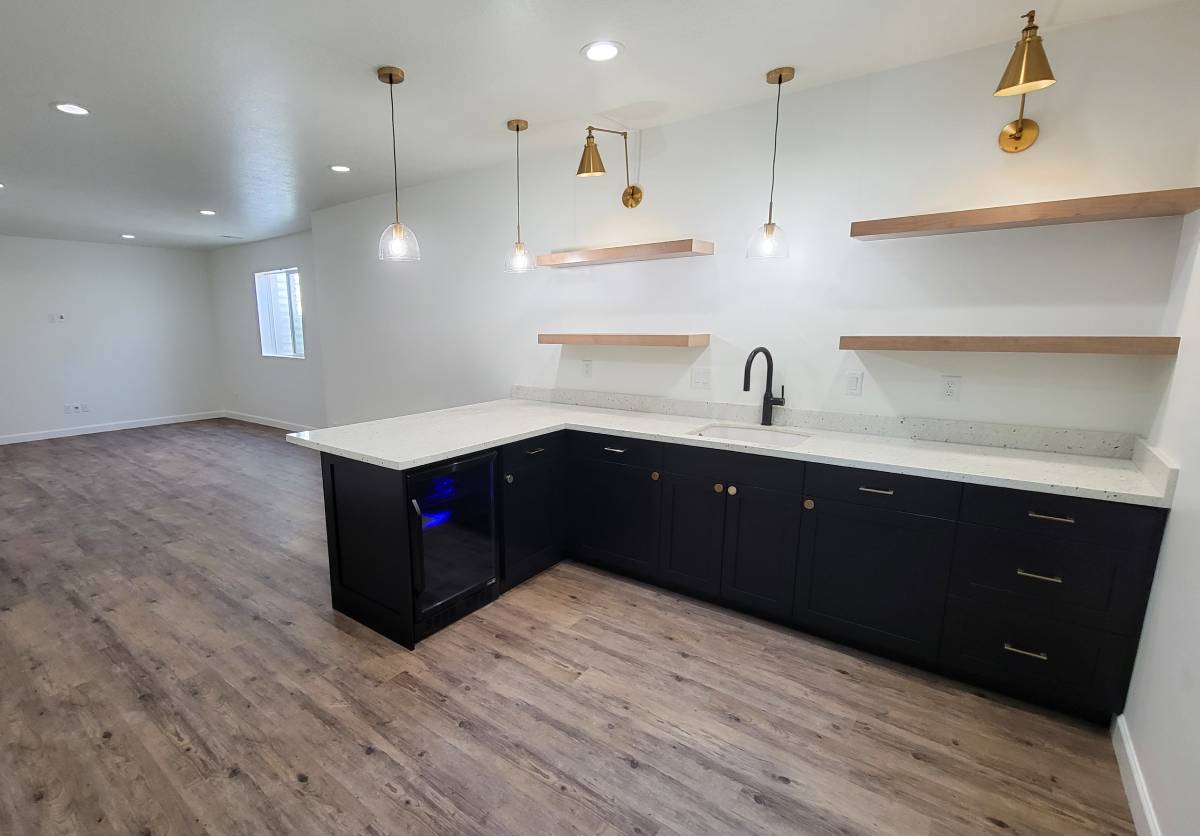
- Kitchenettes or wet bars
- Custom built-ins or premium materials
- Major plumbing work
Those features are where budgets shift quickly and why two basements with the same square footage can end up with very different final costs.
Basement Cost Calculator
General price ranges are a good starting point, but they don’t tell you what your basement will cost. This simple estimator walks you through the same factors contractors use to build a quote. By the end, you’ll have a realistic price range based on your space and goals.
Step 1: Start With Your Square Footage
Most basement projects are priced per square foot. In Utah, a realistic starting range is:
- $40 to $70+ per square foot
To get a rough base cost, multiply your basement size by your expected finish level.
For example: 1,000 sq ft × $50/sq ft = $50,000 starting point
This gives you a baseline, but it’s only the beginning.
Step 2: Add Rooms And Layout Complexity
Open layouts cost less. The more rooms and basement walls you add, the more framing, electrical work, and labor costs you incur.
Typical adjustments:
- Open layout: no major increase
- 1–2 rooms: +$5,000–$15,000
- 3+ rooms: +$15,000–$30,000
If you’re planning for bedrooms or offices, expect your costs to go up accordingly.
Step 3: Factor In Bathroom Or Plumbing
Plumbing is one of the biggest cost drivers in any basement project. Typical additions:
- Half or full bathroom: +$8,000–$20,000+
- Wet bar or kitchenette: +$3,000–$12,000
If your basement already has plumbing rough-ins, you’ll likely land on the lower end of these ranges.
Step 4: Choose Your Finish Level
Your material and design choices have a major impact on total cost.
- Basic finish: cost-effective materials such as standard flooring, lighting, and fixtures
- Mid-range finish: upgraded materials and more defined spaces
- High-end finish: custom work, premium materials, detailed design
Moving from basic to high-end can easily double your finish costs per square foot.
Step 5: Add Permits And Final Costs
Most basement projects in Utah require permits and inspections.
- Typical range: $1,000–$3,000
You should also account for small overages, design changes, or upgrades during the build.
Example Basement Cost Estimate
Here’s what a realistic scenario might look like:
- 1,000 sq ft basement at $55/sq ft = $55,000
- Add 2 bedrooms: = $10,000
- Add 1 bathroom = +$12,000
- Permits and misc = +$2,000
- Estimated total: ~$79,000
That’s how quickly a project moves from a rough idea to a real number.
Cost Breakdown By Feature
This is where your budget really takes shape. Square footage gives you a starting point, but features drive the final cost. Adding plumbing, walls, or custom finishes can shift your total fast, sometimes by tens of thousands.
Below is a realistic breakdown of the typical costs for each major component. Keep in mind that these costs can vary depending on specifics.
Framing And Insulation
Framing turns your basement from an open space into defined rooms. Insulation helps with comfort and energy efficiency, especially important in Utah’s climate.
- Estimated cost: $3,000–$8,000
- Higher if you’re adding multiple rooms or complex layouts
This is one of the first steps and sets the foundation for everything else.
Electrical And Lighting
Most unfinished basements require full electrical work, including outlets, lighting, and sometimes a panel upgrade.
- Estimated cost: $2,500–$7,500
- More if you add recessed lighting, home theaters, or office setups
Lighting alone can change the feel of the space dramatically.
Plumbing (Bathrooms Or Wet Bars)
This is one of the biggest cost drivers.
- Bathroom addition: $8,000–$20,000+
- Wet bar or kitchenette: $3,000–$12,000
If your basement isn’t already roughed in for plumbing, expect costs on the higher end.
Drywall And Paint
Once framing and systems are in place, drywall brings the space to life.
- Estimated cost: $5,000–$12,000
- Varies based on ceiling height and total square footage
Paint is usually included here, but it can increase with custom finishes.
Flooring
Flooring depends heavily on the look you want and how you plan to use the space.
- Carpet: $3–$7 per sq ft
- LVP (luxury vinyl plank): $5–$10 per sq ft
- Tile: $8–$15+ per sq ft
Basements often require moisture-resistant materials, which can slightly increase costs.
Doors, Trim, And Finishing Details
These are the finishing touches that make the space feel complete.
- Estimated cost: $2,000–$6,000
- Includes baseboards, interior doors, and trim work
Custom carpentry or built-ins will push this higher.
Permits And Inspections
Permits are required for most basement finishing projects in Utah, especially when electrical or plumbing is involved.
- Estimated cost: $1,000–$3,000
- Varies by city (Sandy, Draper, Lehi, etc.)
Skipping permits might save money upfront, but it can create problems when selling your home.
What Impacts Basement Finishing Costs?
Two basements with the same square footage can end up with completely different price tags. Here’s what actually moves your cost up or down.
Basement Size And Layout
Bigger basements cost more, no surprise there. But layout matters just as much.
- Open layouts cost less
- More rooms = more framing, electrical, and labor
A simple design keeps costs predictable.
Plumbing And Bathroom Additions
Adding a bathroom is one of the fastest ways to increase your budget. It’s not just fixtures. You’re paying for:
- Plumbing lines
- Venting
- Permits
- Labor
If your basement already has rough-ins, you’re in a much better position.
Finish Level And Materials
Your finish level plays a huge role in cost.
- Basic: standard materials, minimal upgrades
- Mid-range: better flooring, lighting, and fixtures
- High-end: custom work, premium materials, detailed finishes
Small upgrades add up quickly.
Existing Conditions
Not all basements start the same. Costs can increase if your basement needs:
- Moisture mitigation
- Structural adjustments
- Ceiling height modifications
- Electrical panel upgrades
Older homes tend to require more prep work.
Permits And Local Requirements
Every city has slightly different requirements.
- Inspection timelines
- Permit costs
- Code requirements
Working with a contractor who knows Utah regulations can save time and avoid delays.
Cost By Basement Type
Not every basement project is built the same, and that’s a big reason costs vary so much. Before you estimate your budget, it helps to understand what type of space you’re actually planning to create.
Basic Finished Basement
A basic finished basement is the most straightforward option. This usually means an open layout with minimal walls, standard finishes, and no major plumbing work. It’s designed to make the space usable without overcomplicating the build.
Most projects in this category fall between $40,000 and $60,000, depending on size and material choices. Because the layout stays simple, labor and material costs remain more predictable. This is often the right move if you want extra living space without committing to a full-scale remodel.
Mid-Range Basement Remodel
A mid-range remodel adds structure and flexibility. Instead of one open area, the space is divided into defined rooms, such as a bedroom, office, or separate living area.
Costs typically range from $60,000 to $90,000, making this the most common type of basement project. You’ll usually see upgraded flooring, better lighting, and sometimes a bathroom included. This level of finish makes the basement feel like a natural extension of the home.
High-End Or Apartment-Style Basement
A high-end basement goes beyond added space and turns the area into a fully functional living environment. This often includes a bathroom, kitchenette, bedrooms, and more custom finishes throughout.
These projects usually start at around $90,000 and can exceed $120,000, especially when designed for rental use or multi-generational living. In Utah, this type of basement is becoming more common as homeowners look to get more value out of their existing property.
Utah-Specific Considerations
National averages only go so far. Utah has its own housing trends, building styles, and local requirements that can influence both cost and planning.
Larger Basement Sizes
Homes in Utah tend to have larger unfinished basements than those you’ll find in many other parts of the country. That gives you more flexibility in design, but it also increases the total cost of the project.
Even if your cost per square foot stays consistent, a larger footprint means a higher overall investment. The upside is that you’re often getting more usable space for the money than with above-ground construction.
Strong Demand For Finished Basements
Demand for basement finishing remains high across Utah, especially in areas like Sandy, Draper, and Lehi. Many homeowners are choosing to improve their current homes rather than enter a competitive housing market.
That demand can affect contractor availability and timelines. Projects may take longer to schedule during peak seasons, and pricing can reflect that demand.
Rental And ADU Potential
In many Utah homes, basements are designed with long-term flexibility in mind. It’s common to see them used as rental units, in-law suites, or private guest spaces.
If that’s your goal, the project may require additional features like egress windows, separate entrances, or expanded plumbing and electrical systems. These additions increase upfront cost but can also improve long-term value.
Local Permits And Code Requirements
Permits are a standard part of most basement finishing projects in Utah, especially when electrical, plumbing, or structural changes are involved.
Each city has its own process, and requirements can vary depending on where you live. Inspections, local building code compliance, and approval timelines all play a role in how smoothly your project moves forward.
How To Save Money On Your Basement Remodel
There’s no way around it. Finishing a basement is a significant investment. The good news is that a few smart decisions early on can keep costs under control without sacrificing quality.
Keep The Layout Simple
The more complex your layout, the higher your cost. Every additional wall increases framing, electrical work, and labor time.
A simpler, more open design keeps the project easier to manage and often makes the space feel larger once it’s finished.
Be Strategic With Finishes
Not every part of your basement needs premium materials. You can keep costs under control by using standard finishes in lower-traffic areas while investing more in key spaces, such as the main living area or bathroom.
This approach gives you a polished result without stretching your budget too far.
Plan Plumbing Early
Plumbing is one of the most expensive additions to any basement project. Bathrooms, wet bars, and laundry areas all require additional work that can quickly increase your total cost.
If your basement already has plumbing rough-ins, using them can save a significant amount. If not, careful planning helps avoid costly changes later.
Consider A Phased Approach
If budget is a concern, some homeowners choose to complete their basement in stages. Starting with the core structure, like framing, electrical, and drywall, allows you to make the space functional first, then add features over time.
This approach can make the project more manageable while still working toward a long-term vision.
Work With A Local Contractor for a Finished Space
A contractor with Utah-specific experience brings more than just construction knowledge. They understand local permitting processes, inspection requirements, and common challenges that come with basement projects in the area.
That experience can help prevent delays and keep your project on budget.
ROI: Is Finishing A Basement Worth It?
Finishing a basement means understanding how that space performs over time. The return comes down to usability, resale value, and how well the project aligns with your goals.
Added Livable Square Footage
One of the biggest advantages is simple: you’re turning unused space into livable square footage.
Finished basements typically cost less per square foot than above-grade additions, but they still increase your home’s functional size. That matters to buyers. More bedrooms, more living space, and more flexibility all make a property more competitive when it hits the market.
While you may not recoup every dollar, you’re improving how the home is used every day and that has real value.
Resale Value In Utah
In Utah’s housing market, finished basements are often expected, not optional. Homes with completed lower levels tend to stand out, especially in family-oriented areas like Sandy, Draper, and South Jordan.
Buyers are looking for:
- Extra bedrooms
- Flexible living areas
- Space for guests or extended family
A well-finished basement can make your home easier to sell and help justify a higher asking price, even if the full cost isn’t directly reflected in the sale.
Rental Income Potential
For many homeowners, the ROI goes beyond resale. A basement that’s designed as a separate living space (complete with a bathroom, bedroom, and possibly a kitchenette) may create rental income. In some cases, that income can offset a portion of the project cost over time.
This is especially relevant in Utah, where demand for rental housing remains steady. If your layout and local regulations support it, a basement apartment can turn your remodel into a long-term investment.
Lifestyle Value Still Matters
Not every return shows up on paper. A finished basement can give you:
- More room to spread out
- Dedicated space for work or hobbies
- A place for guests or family to stay
For many homeowners, that added flexibility is just as important as resale value. If you plan to stay in your home for several years, the day-to-day basement remodel benefits outweigh purely financial considerations.
What Does It Cost To Finish A Basement In Utah? Get A Real Answer
Basement finishing costs vary widely. But by now, you’ve seen what actually drives those numbers.
The size of your space, the features you choose, and how you plan to use the basement all play a role. That’s why general estimates only go so far. Two homes with the same square footage can end up with very different project costs.
When you’re ready, you can also schedule a free consultation to walk through your space, talk through options, and get expert input on your project. Finishing your basement is a big decision. Getting the right numbers upfront makes it much easier. Contact us today!
FAQ
How Much Does It Cost To Finish A Basement In Utah?
Most basement finishing projects in Utah cost between $40,000 and $100,000+, depending on size, layout, and features. Basic finishes fall on the lower end, while basements with bathrooms, bedrooms, or apartment-style layouts land on the higher end.
What Is The Average Cost Per Square Foot To Finish A Basement?
In Utah, most homeowners pay between $40 and $100+ per square foot. Simpler finishes cost less, while higher-end materials, custom layouts, and plumbing additions drive up the price.
How Much Does It Cost To Finish A 1,000 Sq Ft Basement?
A 1,000-square-foot basement typically costs between $50,000 and $90,000+ to finish. The final price depends on the number of rooms, whether you add a bathroom, and the overall finish level.
What Adds The Most Cost To A Basement Remodel?
The biggest cost drivers are bathrooms, plumbing, and layout complexity. Adding walls, bedrooms, or custom features quickly increases labor and material costs, especially if plumbing needs to be installed from scratch.
Do I Need Permits To Finish A Basement In Utah?
Yes, most basement finishing projects in Utah require permits, especially for electrical, plumbing, and structural work. Permit costs depend on the city and the scope of the project.
Is Finishing A Basement Worth The Investment?
For many homeowners, yes. A finished basement adds usable living space, improves resale appeal, and can generate rental income. While you may not recover every dollar, the added functionality and long-term value often make it a worthwhile investment.
How Long Does It Take To Finish A Basement?
Most basement projects depend on size, complexity, and permitting timelines. Larger or more customized builds can take longer, especially during busy seasons.